ServicesFlat Roofing
Flat Roofing in Apache Junction
We repair, recoat and replace low-slope roofs on homes, additions, patios and carports. You get a roof that drains properly and holds up to long summers, with one person answering your questions and coordinating the work from estimate to cleanup.
What flat roofing involves
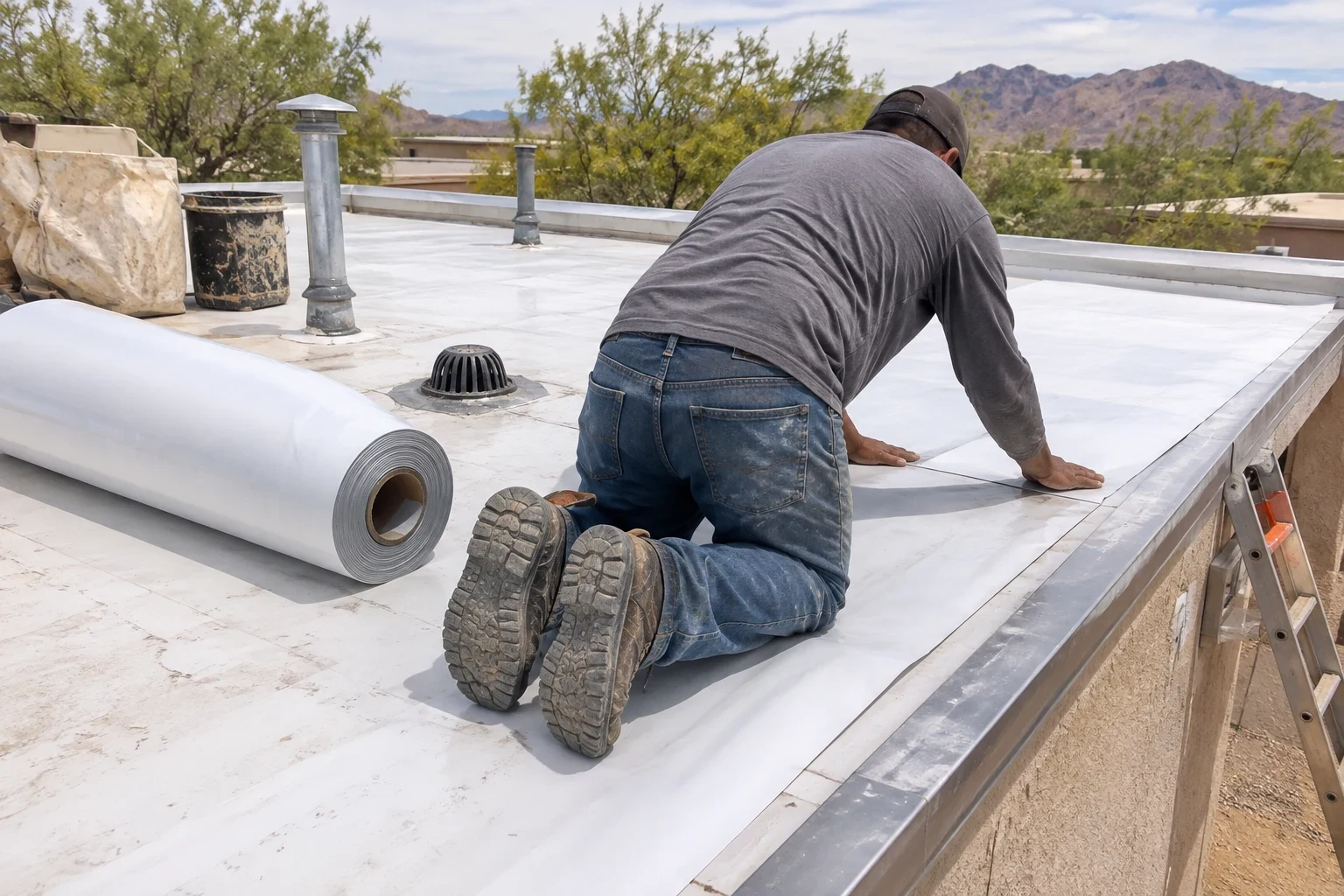
A flat roof is never truly flat. It is built with a slight pitch that moves water toward drains or scuppers, and it stays dry because of a continuous membrane, not overlapping pieces. When that membrane fails or the pitch is wrong, water sits and finds the weakest seam.
We work with modified bitumen, TPO single-ply membrane and elastomeric coatings, and we choose between them based on the deck, the drainage and how long you plan to keep the house. Out here, months of direct sun dry and crack roof surfaces, then monsoon storms test every seam at once, so the system has to answer both.
One person handles your job from the first phone call to the last sweep of your yard. You will not be passed between an estimator, a scheduler and a foreman.
What the work includes
Modified bitumen systems
A multi-ply, asphalt-based membrane with a granulated cap sheet that resists foot traffic and UV. It suits roofs with rooftop equipment and areas that see regular service visits.
TPO single-ply membrane
A white, reflective sheet with heat-welded seams. The welds become one continuous piece, and the light surface keeps more heat off the rooms below.
Elastomeric coatings
When the existing roof is dry and sound, a coating can renew its reflectivity and seal small cracks without a tear-off. If you are weighing sprayed foam instead, our Foam Roofing page covers that system.
Drainage correction
We add tapered insulation and crickets where water collects, especially along parapets and behind cooling units. Fixing the slope is often what makes a new membrane last.
Flashing, parapets and penetrations
AC curbs, vent stacks, parapet caps and scupper openings are where most flat roofs leak first. Each one gets new flashing detailed to the membrane we install.
Signs your flat roof needs attention
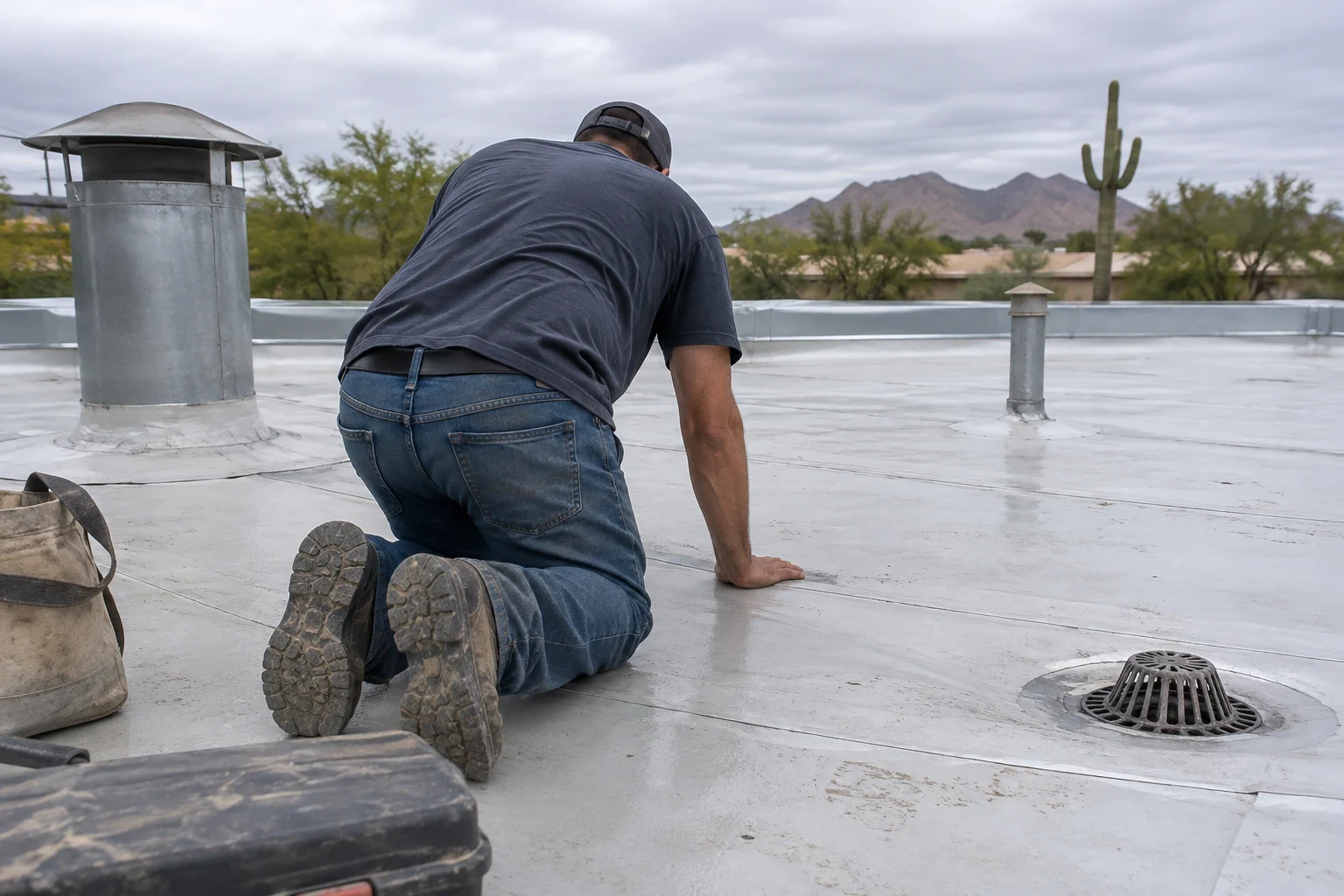
- Water that lingers
- Puddles still standing two days after a storm mean the roof is low in spots or a drain is restricted. Ponding speeds up wear on any membrane.
- Blisters and bubbles
- Trapped moisture or air lifts the surface into soft domes. They tend to split under summer heat.
- Cracked or chalky coating
- An alligator pattern, bare fabric showing through or a powdery residue on your hand means the protective layer has worn thin.
- Stains near the cooler or parapet
- Ceiling marks beneath equipment or along an outside wall usually trace back to the flashing around those spots. The broad middle of the roof is seldom the culprit.
- Seams pulling back
- Edges lifting at laps or parapet walls let wind-driven rain under the membrane. Caught early, this is often a repair, not a replacement.
How a flat roof job runs
- 1
A conversation by phone
You describe what you are seeing and we talk through likely causes. Then we set a time to walk the roof.
- 2
Roof visit and written estimate
We check the membrane, the slope, the flashings and any soft decking, and take photos of what we find. You receive a line-item estimate and an honest answer on repair, recoat or replace.
- 3
Scheduling and preparation
Your contact sets the date, orders materials and tells you what to expect. In the hottest months we start early so adhesives and membranes go down at workable temperatures.
- 4
Installation
The crew protects landscaping and walls, removes old material where needed, replaces any damaged deck and installs the new system with its flashings. Your contact stays reachable through the day.
- 5
Cleanup and final look
Old membrane and scraps are hauled off, and a magnetic sweep picks up stray fasteners from the yard and driveway. Before we leave, you and your contact go over the finished roof together, drains and edges included.
What shapes the cost
Flat roof pricing depends far more on what is underneath and how the roof drains than on square footage alone. Your estimate lists each part of the work separately, so you can see where the money goes before anything starts.
- Condition of the deck
- Wet insulation or rotted sheathing has to come out before a new membrane goes down. We show you photos of anything that needs replacing.
- System choice
- A coating over a sound roof, a TPO membrane and a modified bitumen build each carry different material and labor costs.
- Drainage work
- Tapered insulation, new crickets or reworked scuppers add to the job but often decide how long the roof lasts.
- Penetrations and access
- Several AC units, skylights or vent stacks mean more detailed flashing. A roof that is hard to reach with materials takes longer to load and clear.
Flat roofing questions
- Is a coating enough for my current flat roof?
- It can be. A coating makes sense when the roof underneath is dry, firmly attached and draining the way it should. If moisture is trapped inside or blisters cover much of the surface, a coating just locks the problem in, and we will say so directly.
- How do I decide between TPO and modified bitumen?
- Each fits a different kind of roof. TPO is a light, reflective sheet with heat-welded seams, well suited to open roofs that seldom get walked on. Modified bitumen stands up better where a technician crosses the roof to service equipment. We recommend based on how your roof is really used and explain why.
- Will you handle the permit?
- Yes, whenever the job requires one. We submit the paperwork, book the inspection and let you know how it goes, so you are not left sorting it out with the city.
- Once work begins, who keeps me updated?
- Your contact stays the same person who walked your roof and wrote your estimate. That person arranges the crew and the materials, and any question you have mid-job goes straight to them.
- Does my cooling unit have to be moved?
- Sometimes a unit is lifted or disconnected so the membrane can continue underneath it. We plan that with you in advance, keep the time without cooling as short as we can and flash the curb fresh before the unit is set back down.
One conversation, start to finish
Describe what you are noticing on your flat roof and we will arrange a time to look at it. The person you speak with first is the one who coordinates the work through to the final cleanup.