ServicesRoof Replacement
Roof Replacement in Apache Junction
Once a roof is worn out across its whole surface, we strip it to the bare deck, repair the wood beneath and install a new system made for long hours of hard sun. The person who gives you the estimate stays your contact through the last sweep of the yard.
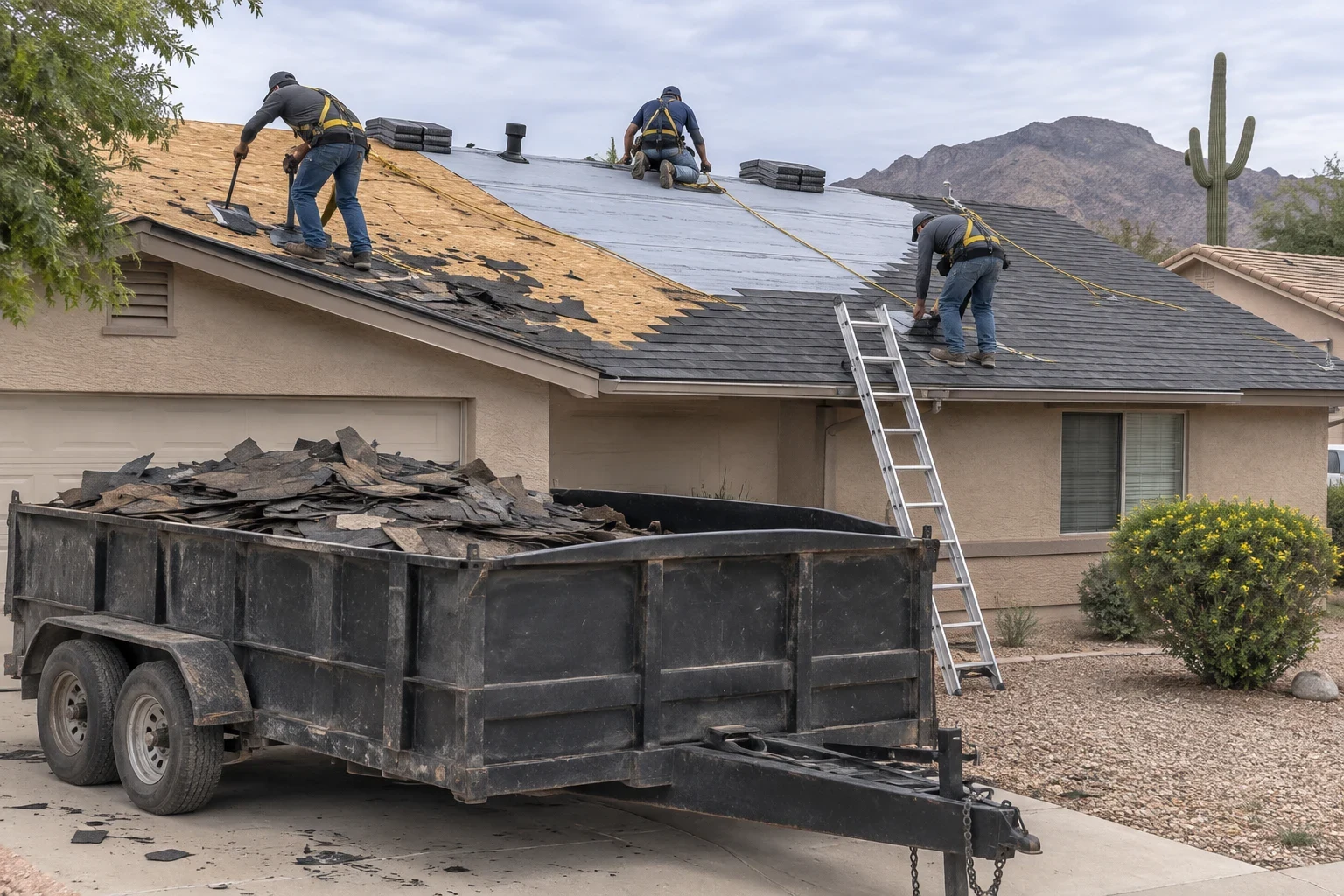
When replacing makes more sense than repairing
Roofs rarely give out in a single day. The underlayment under tile dries and splits after years of heat, shingles lose their granules and grow brittle, and foam coatings thin until bare foam shows. Patching buys some time, but when the layer that actually stops water is worn everywhere, each fix simply relocates the next leak to a nearby spot.
We'll tell you honestly where your roof stands. If roof repair is enough, you'll hear that from us. If replacement is the smarter investment, we explain it with photos from your own roof rather than a brochure.
One person handles your job from estimate to cleanup. There's no retelling the details to a new crew lead, and no waiting on an office to learn how the day went.
What a full replacement includes
- Complete tear-off
- We remove the old roofing down to the deck, along with worn underlayment, old flashing and fasteners. Tarps and plywood go down first to protect plants, AC units and walls below.
- Deck repair you can see
- With the deck exposed, we check for soft or delaminated sheathing and rot around vents and valleys. Damaged boards are replaced, and we show you photos before anything covers them.
- Heat-rated underlayment
- Underlayment is usually the first thing to fail under tile. We use a high-temperature product suited to your roof type, lapped and fastened so it sheds water when monsoon rain gets past the surface.
- New flashing and pipe boots
- Walls, valleys, chimneys and vents get new metal and new boots. Most leaks begin at these details, so this is where we slow down.
- The roofing you choose
- Concrete or clay tile, architectural shingles, or spray foam with a reflective coating for low-slope sections. Our Tile Roofing, Shingle Roofing and Foam Roofing pages go deeper on each.
- Cleanup and nail sweep
- Debris goes straight into a dumpster or trailer as we work. At the end we run a magnet across the driveway, yard and gravel beds.
Signs your roof is due for replacement
Leaks in more than one place
A single stain usually traces back to one failed detail. Stains in several rooms point to waterproofing that is worn across the roof.
Brittle paper under the tile
Tile can look sound from the street while the felt underneath falls apart. If a lifted tile reveals cracked or missing underlayment, the roof is running out of time.
Curled or bare shingles
Shingles that cup, crack or show the dark mat through the granules have lost their sun protection and will keep declining.
Foam showing through
On a foam roof, exposed tan foam, blisters or soft areas mean the coating has worn away in spots. Beyond a certain point, recoating stops making sense.
Soft spots or sagging
A deck that flexes underfoot or a ridgeline that dips usually means water has been reaching the wood for some time.
Repairs that keep coming back
If you've paid for patches two or three times in a few years, a new roof is often the better place for that money, since it stops the repeat visits altogether.
What moves the price of a new roof
A replacement quote comes from measuring and walking your actual roof, so we don't offer a number sight unseen. The written estimate breaks the job into separate lines, which lets you see exactly where each dollar goes. These are the factors with the biggest effect.
Square footage and slope
Every added square of roof means more underlayment, more roofing and a longer stretch of crew time. A steep pitch slows footing and calls for extra fall protection, and that shows up in the labor line.
Material choice
Tile, shingles and foam each carry different material costs, install times and weights. Relaying sound concrete tile over new underlayment usually costs less than buying all-new tile.
Condition of the deck
How much sheathing needs replacing only becomes clear once the old roof is off. Your estimate spells out how replacement wood is priced, so that number holds no surprises.
Layers and details
A second or third old layer means more removal time and more disposal. Skylights, chimneys, valleys and rooftop equipment each add flashing work.
Permits and access
Permit fees differ from one jurisdiction to the next. Narrow side yards or a short driveway can change how materials arrive and how debris leaves.
How a replacement goes
- 1
Estimate visit
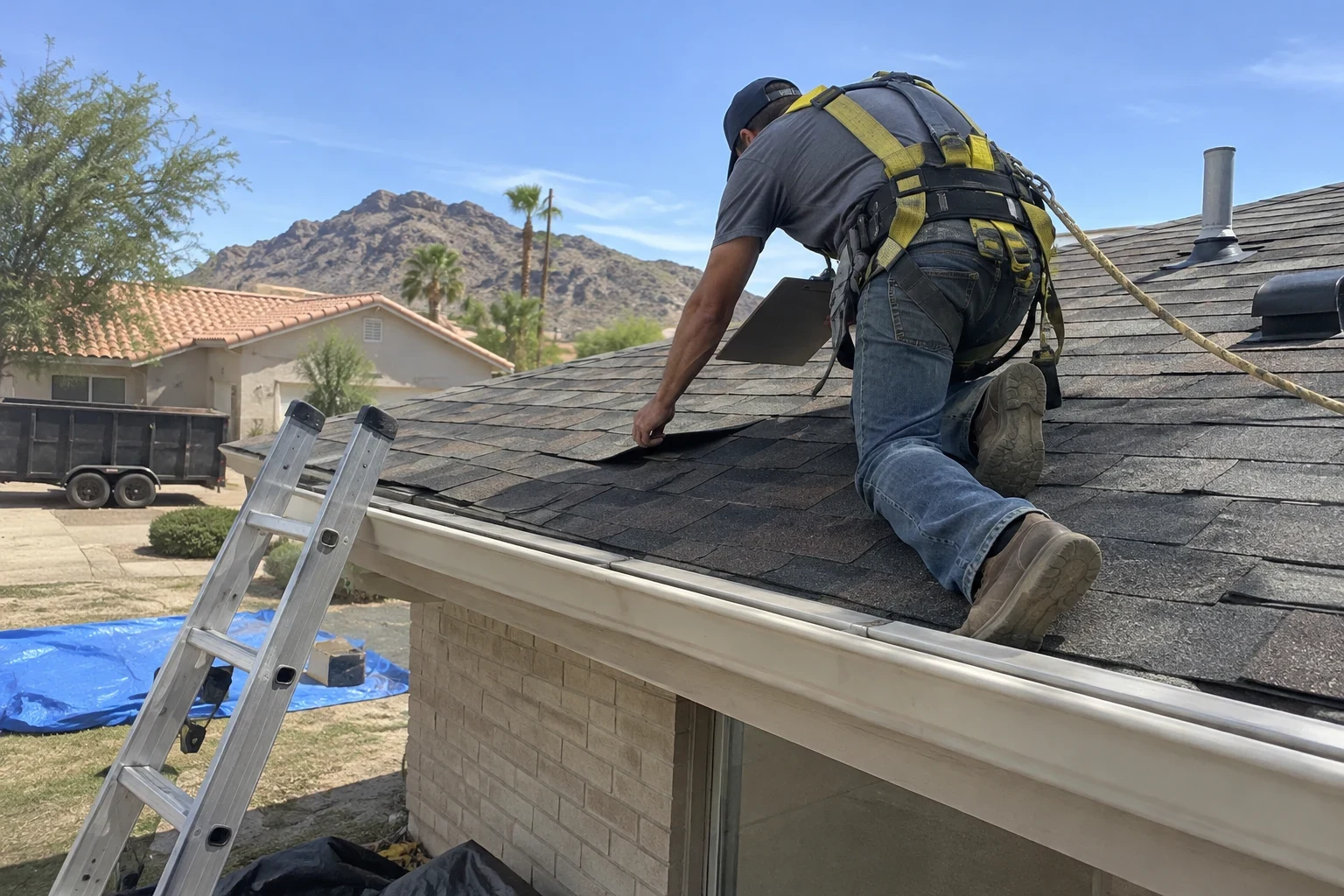
We walk the roof, take measurements and photograph what matters. Then we sit with you to compare materials and hand over a written estimate with each part of the job listed separately.
- 2
Permit and scheduling
We pull the permit wherever your city or county calls for one and order materials. In summer, crews begin early so the heaviest work is done before afternoon heat sets in.
- 3
Tear-off and deck work
We remove the old roof in manageable sections and dry it back in as we go, so no part of your home sits exposed longer than it must. Deck repairs happen the same day, with photos sent to you.
- 4
Installation
Underlayment, flashing and the finished roofing go down in sequence, with care at ridges, edges and transitions where the finish is most visible.
- 5
Final walk and cleanup
Your contact walks the completed roof with you, shares the photos and confirms the yard is clean. Where a final permit sign-off is required, we schedule it.
Roof replacement questions
Can you reuse my existing tile?
Often, yes. Concrete tile tends to outlast the underlayment under it, so we can lift the tile, put down new underlayment and flashing, and set it back in place. We tally broken pieces in advance and match replacements as closely as the available profiles allow.
How long does a replacement take?
Many single-story shingle roofs wrap up in a few working days. Tile, larger footprints and steeper slopes take longer. Your contact gives you a realistic schedule at the estimate and lets you know if weather shifts it.
Can I switch from shingles to tile?
Sometimes. Tile weighs far more than shingles, so the framing has to carry the load, and that can require an engineer's review. Moving from tile to shingles is lighter and usually simpler, and we lay out the trade-offs in both directions.
Do I need to be home during the work?
No. We'll need a way into the yard and a working exterior power source, and it helps if cars are parked off the driveway for the duration. Your contact checks in with you and sends photos of anything found beneath the old roof.
Who do I talk to if something comes up mid-job?
The same person who wrote your estimate. They already know your roof, your material choices and the schedule, so you get a direct answer instead of a transfer.
Start with a conversation about your roof
Let us know what you've noticed and about how old the roof is. We'll arrange a visit, go over the options that fit your home, and the same person will stay with the job until the yard is clean.