ServicesShingle Roofing
Shingle Roofing in Apache Junction
We install and repair asphalt shingle roofs with close attention to underlayment, flashing and ventilation, the parts that decide how long shingles last under strong sun. One person answers your questions and coordinates the job from the first visit to the final cleanup.
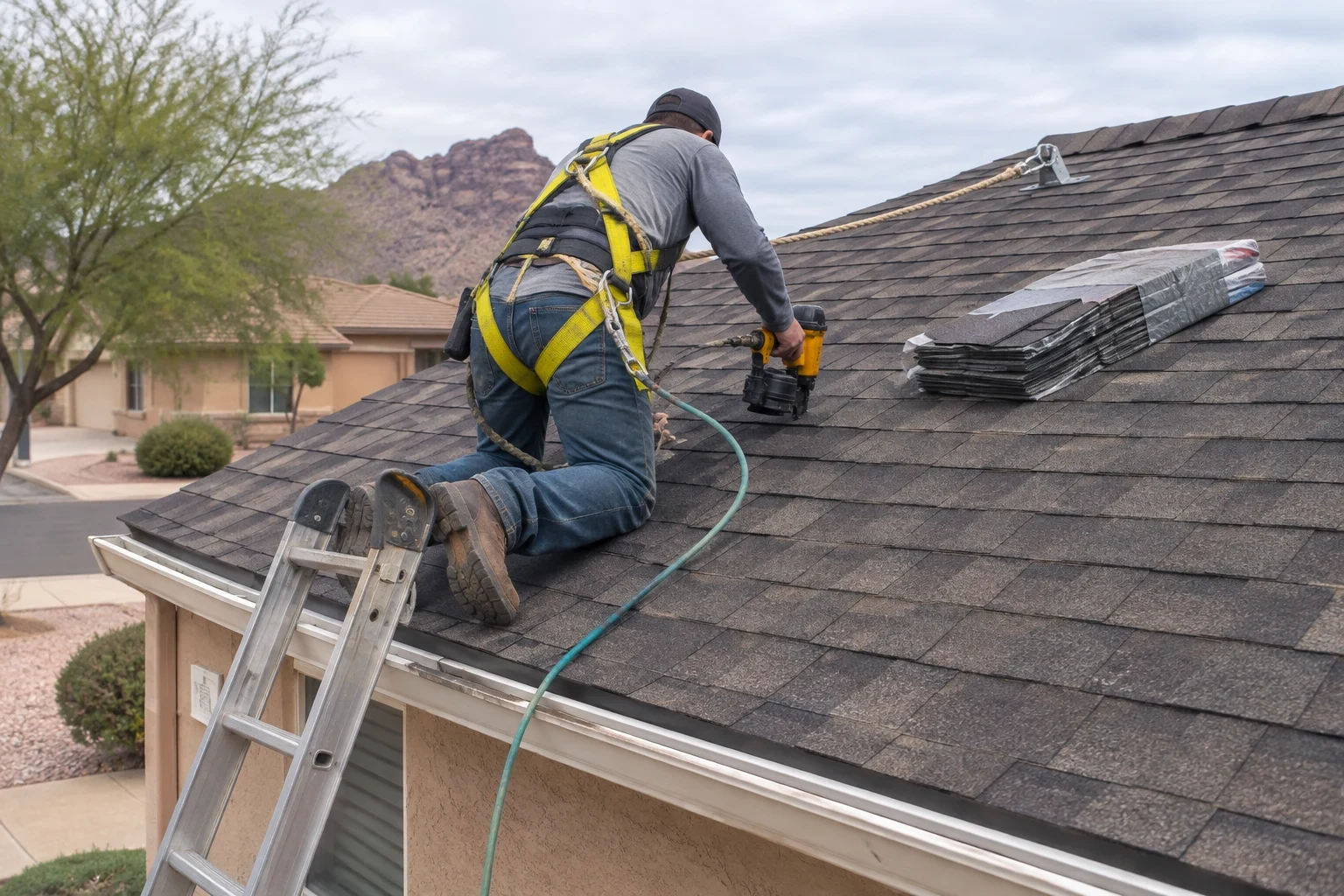
A shingle roof that keeps its shape and color
Architectural asphalt shingles suit many pitched roofs well. They weigh less than tile, go on faster and come in colors that sit comfortably on stucco and block homes. Heat is their weak point. Years of intense UV dry out the asphalt, the granules shed and the mat beneath begins to crack and curl.
Much of our work is about slowing that process. We select shingles rated for high heat, lay them over synthetic underlayment and make sure the attic vents properly so the deck does not bake from underneath. If your roof only needs help in a few spots, we tell you and suggest roof repair instead of a full tear-off.
From the estimate on, you deal with one person. They set the crew schedule, order your materials, answer your calls themselves and inspect the completed roof alongside you at the end.
What our shingle work includes
Full tear-off to the sheathing
Rather than stacking new shingles on old ones, we strip the roof and its underlayment to bare decking. With the deck exposed, we can spot soft or delaminated boards and replace them before the new roof goes on.
Synthetic underlayment and drip edge
Synthetic underlayment stands up to heat much better than the felt paper used on older roofs. Drip edge at the eaves and rakes directs water away from the fascia.
New flashing, not reused metal
Most shingle leaks start at the flashing. We install fresh step flashing, pipe boots and counterflashing wherever the roof meets walls, chimneys and vents.
Ridge and attic ventilation
We check that intake and exhaust are in balance and add ridge vent or off-ridge vents where the attic traps heat. Steady airflow stops the shingles from cooking from below.
Targeted shingle repairs
Lifted tabs, missing pieces and cracked pipe boots can often be handled on their own. We match color as closely as current product allows and are candid when a repair will stand out.
Cleanup and magnet sweep
Torn-off shingles go directly into a dumpster or trailer. Before leaving, we roll a magnetic sweeper across the yard, driveway and planting beds.
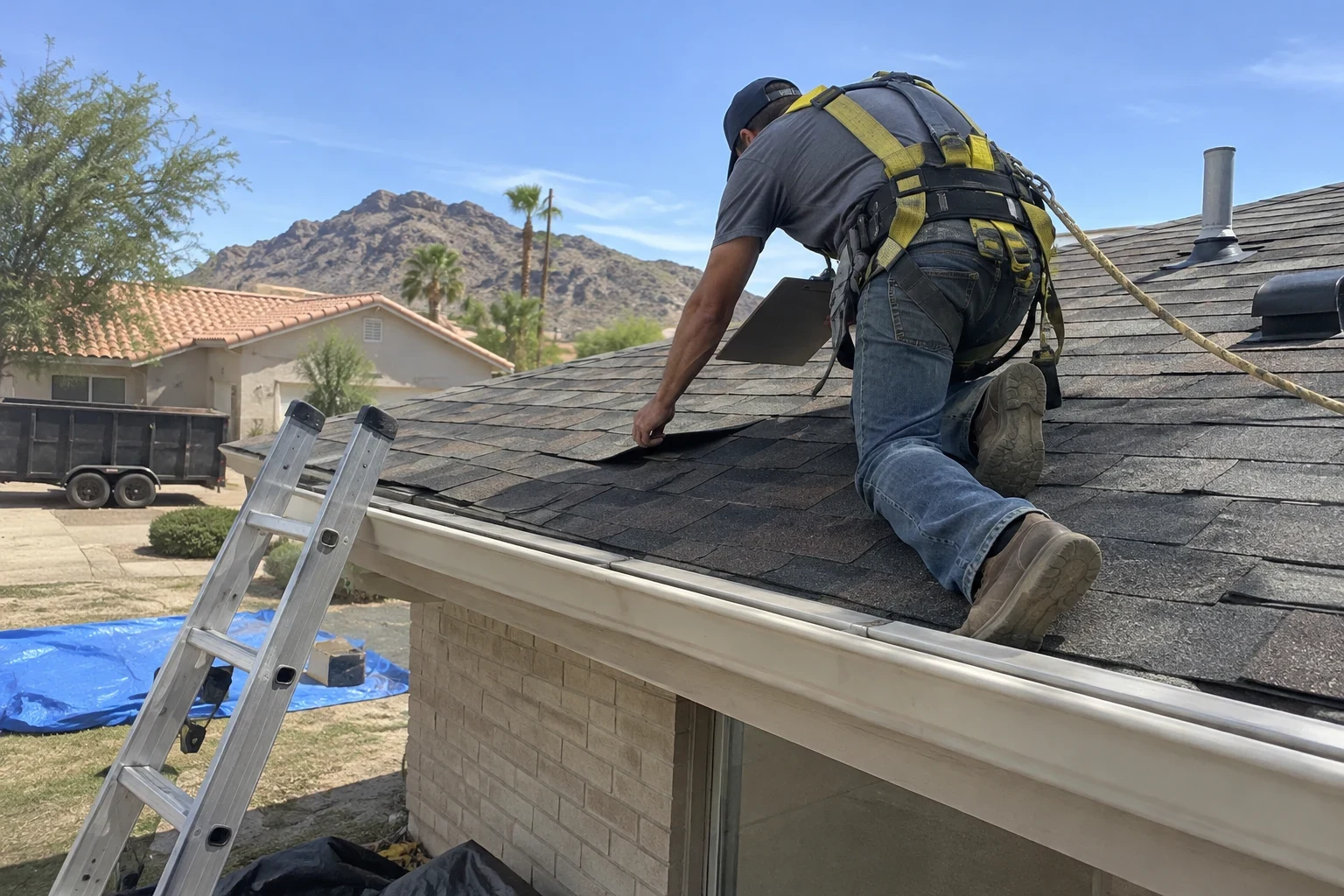
Signs your shingles need attention
- Bare, smooth patches
- Dark spots where the granules are gone leave the asphalt exposed. Without that layer, the shingle takes the full force of the sun and ages quickly.
- Curling or cupped edges
- Edges that turn up or corners that curl down usually point to heat buildup or poor attic ventilation. Curled shingles catch wind and tend to tear off next.
- Lifted tabs after high wind
- Monsoon gusts can break the seal strip and fold tabs back. Once that seal is gone, rain can be driven underneath.
- Ceiling stains or damp insulation
- Brown rings on a ceiling often trace back to flashing or a failed pipe boot, which is not always right above the stain.
- Brittle shingles that snap
- Shingles that crack instead of flexing when lifted are near the end of their service life. Repairs on a roof like this rarely hold for long, and roof replacement is usually the better answer.
How a shingle job runs
- 1
First visit and written estimate
We walk the roof and check the attic, photographing anything worth your attention and reviewing those pictures with you. The estimate itemizes tear-off, decking, underlayment, flashing, ventilation and shingles on separate lines.
- 2
Choosing product and color
We bring samples so you can judge colors against your home in natural light. Lighter, reflective shingles help keep the attic cooler, and we lay out the trade-offs without steering you toward an upgrade.
- 3
Permit and scheduling
We pull the permit where one is required and agree on a start date with you. Crews begin early to stay ahead of the afternoon heat, so plan on a morning arrival.
- 4
Install day
We cover landscaping, strip the old roof, fix any bad decking and dry in with underlayment the same day. Shingles, flashing and vents follow, and the roof is sealed up each evening.
- 5
Final walk and cleanup
Your contact tours the finished roof with you, shows photos of the layers now hidden under the shingles and confirms the yard has been swept for nails. We also arrange any sign-off the permit calls for.
What shapes the price of a shingle roof
We set a price for a shingle roof once we have measured it and looked closely at its condition. Your written estimate lists each part of the job on its own line, so every cost is visible before you agree to anything. Decking damage often hides under old shingles. When tear-off exposes bad boards, we photograph them and give you the added cost before anything is replaced.
- Size and pitch
- The number of squares sets the baseline. A steep roof needs more safety equipment and slows the crew, which adds labor.
- Decking condition
- Soft or delaminated sheathing has to be replaced, and the full extent only shows once the old shingles are off the deck.
- Shingle line and color
- Standard architectural shingles, heavier designer profiles and reflective cool-roof products each sit at a different cost.
- Layers to remove
- A roof with two layers of old shingles takes more labor to strip and more to haul away than a roof with one.
- Roof details
- Chimneys, skylights, valleys and new vents each call for extra flashing and time on the roof.
Shingle roofing questions
- How long will asphalt shingles last on my house?
- Under strong desert sun, shingles often wear out sooner than the rating on the bundle suggests. Attic ventilation, shingle color and the care taken during installation all change the outcome. We prefer to tell you what we actually see on your roof rather than repeat a number from a label.
- Can new shingles go over my old ones?
- Local code sometimes permits a second layer, though we usually advise against it. An overlay hides the condition of the deck, adds weight to the framing and holds more heat in the roof. We explain the choices that fit your roof before you decide.
- Should I choose shingles or tile?
- Shingles cost less at the start and work well on lower-pitched roofs and lighter framing. Tile lasts longer in the sun but weighs far more. Our tile roofing page covers that option, and we are happy to compare the two with you by phone.
- Will someone need to be at the house during the work?
- Only at a couple of points. It helps to meet the crew when they pull up in the morning and to join the final walk once the roof is finished. In between, your contact calls with updates and gives you a heads-up before the noisiest stretch of tear-off. Pets tend to handle the day better indoors.
- Who do I talk to if something comes up mid-job?
- The same person who wrote your estimate. They already know your roof, the color you picked and your schedule, so nothing has to be explained twice to someone new.
Talk through your shingle roof
The person who answers is the one who would manage your project. Describe what you have noticed on the roof or the ceiling, and we will arrange a visit and follow it with a written, line-by-line estimate.