ServicesRoof Repair
Roof Repair in Apache Junction
A leak, a slipped tile or a blistered patch of coating seldom calls for an entirely new roof. We trace the water back to the spot where it enters, repair that area with materials matched to your home, and one person keeps you updated from the first visit through cleanup.
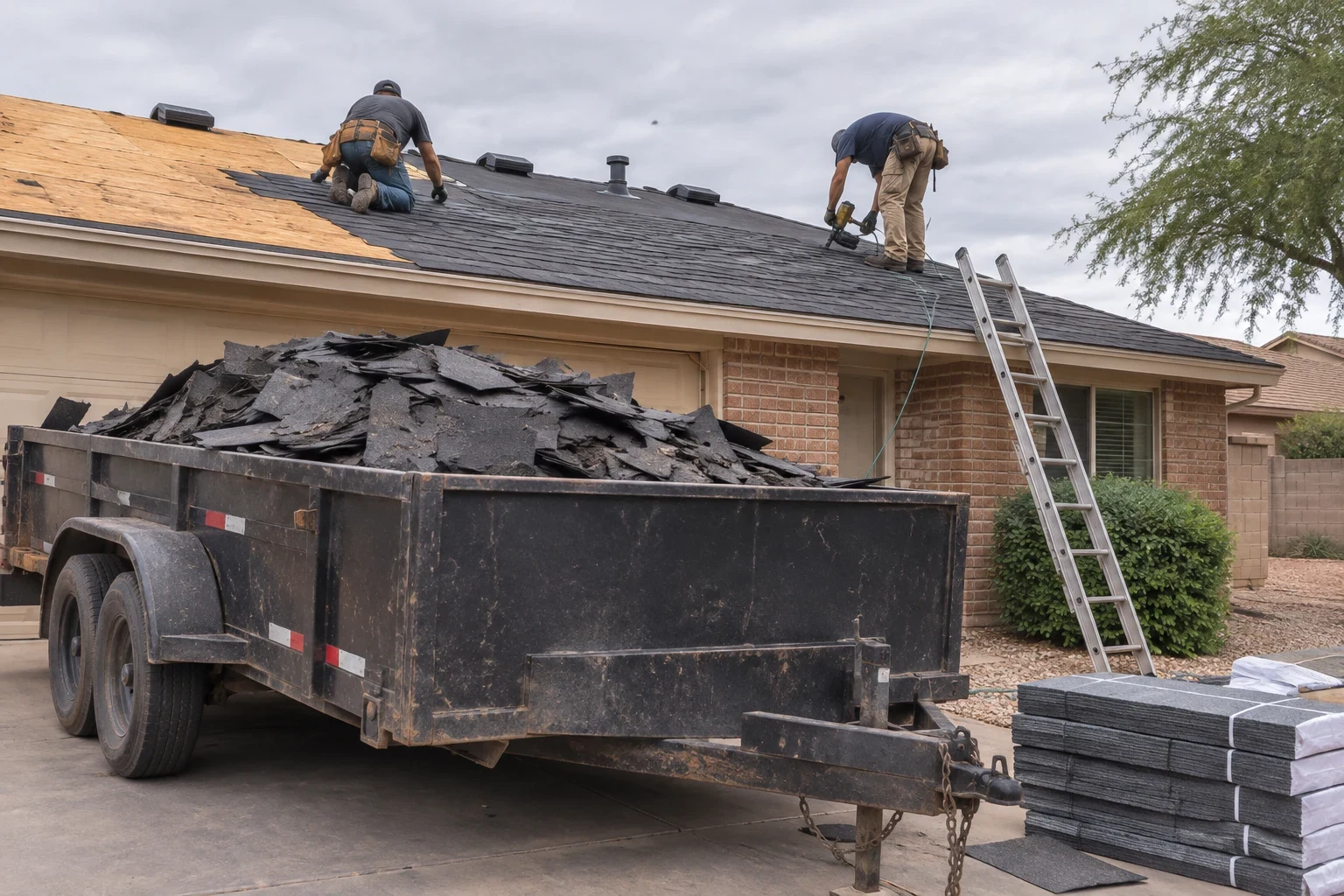
Repairing the cause, not just the stain
Water rarely comes through the ceiling right under the spot where it enters the roof. It runs along underlayment, rafters and decking before it shows up as a stain. Our roof repair starts by tracing that path back to its source, whether it is a cracked tile, a lifted shingle, a split in foam coating or flashing that has pulled away from a wall.
In the desert, sun and heat do more of the damage than most people expect. Felt underlayment beneath concrete tile dries out and cracks long before the tile itself wears out, and asphalt shingles turn brittle. A good repair uses materials that hold up to that exposure and blends quietly with the roof you already have.
From the first conversation, you have one person to call. That same person schedules the crew, explains what was found and checks the cleanup before the job is closed out. If a repair would only buy a short stretch of time, we will tell you so and talk through roof replacement as an option, without pressure.
What a roof repair with us includes
- Leak tracing from inside and out
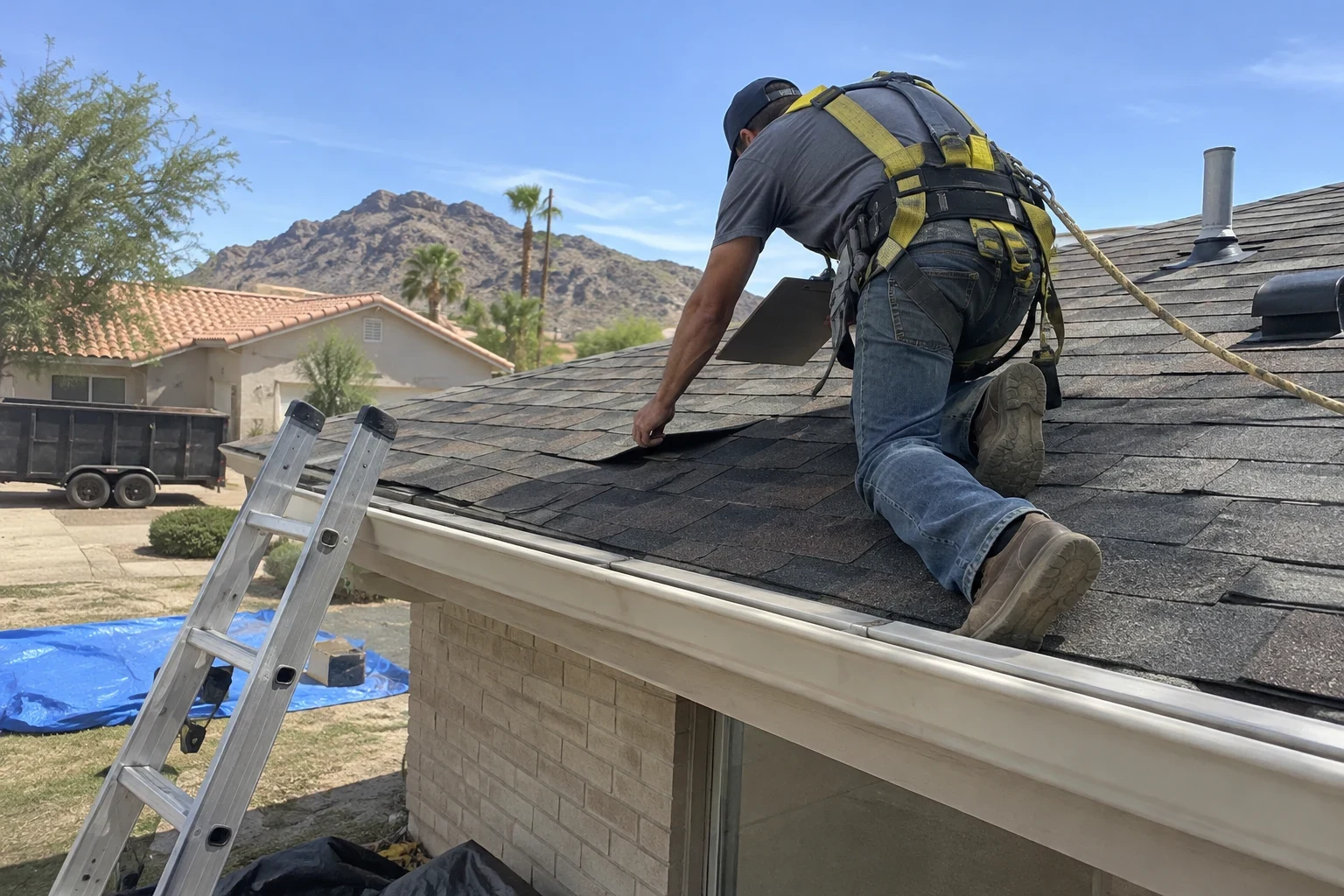
- We check the attic where it is reachable and the roof surface itself, following the water to its point of entry. Each problem area is photographed and shared with you, so the damage is never something you have to take on faith.
- Tile lifting and underlayment patching
- On tile roofs we lift the tiles around the damage, replace torn or brittle underlayment, and relay the tiles in their courses. Cracked or broken pieces are swapped for the closest available match in profile and color.
- Shingle and flashing repair
- Lifted, cracked or missing shingles are replaced and sealed down. We reset or replace flashing at walls, chimneys, vents and skylights, where many leaks begin.
- Foam and flat roof touch-ups
- Blisters, punctures and worn coating on foam and flat roofs are cut out, filled and recoated so the surface sheds water toward the drains or scuppers again.
- Sealing roof penetrations
- Evaporative cooler stands, plumbing vents, solar mounts and AC lines all pass through the roof. We reseal those openings with flashing and sealant suited to the roofing material around them.
- Cleanup and a final walk
- Broken tile, old underlayment, nails and debris are hauled away. Your contact reviews the finished work with you before calling the job done.
Signs your roof needs repair
Ceiling stains or drips after rain
A brown ring on drywall, often first noticed after the summer monsoon rains, means water has been getting through for a while. The sooner the entry point is found, the less decking and insulation need replacing.
Cracked, slipped or missing tiles
Tiles shift from foot traffic, settling and wind. A gap may look small from the yard, but it leaves underlayment open to direct sun, which shortens its life quickly.
Granules in the yard or curling shingles
Shingles that shed granules or curl at the edges have lost much of their protection. Replacing a handful of damaged shingles can carry a roof that is otherwise sound.
Bare spots on a foam roof
Foam showing tan or exposed patches has lost its protective coating. Left alone, sunlight breaks down the foam underneath and small blisters become soft spots.
Water standing on a flat section
Water that sits for days points to a low spot, a blocked scupper or a seam that has opened. Ponding speeds up wear and finds every weak seam.
What moves the price of a repair
A ceiling stain rarely shows the whole problem, so pricing comes after someone has been up on the roof and, where it can be reached, into the attic. Your written estimate breaks the work into separate lines. If the repair turns up something nobody could see beforehand, we stop and go over it with you before any extra work begins.
Roofing material
Lifting and relaying concrete or clay tile takes more labor than working with shingles, and finding a match for an older tile profile can take some searching. On foam and flat roofs, the amount of coating that has to be removed sets most of the labor.
What is under the surface
Decking softened by water, or underlayment that has broken down over a wide area, adds to the scope of the repair. The photos we take show you exactly what was found.
Where the damage sits
Replacing one cracked tile at the eave is not the same job as chasing a leak around a chimney on a steep pitch. Roof height, slope and how easily the crew can reach the spot all change the hours involved.
Openings through the roof
When the leak is at a cooler stand, vent, skylight or solar mount, the repair calls for additional flashing and careful sealing.
How a repair job runs
- 1
Your first call
You describe what you are seeing and where. The person who takes your call is the same person who will coordinate the repair, and they set a time to come out and look.
- 2
On the roof and in the attic
We find the source, take photos and note anything else nearby that needs attention. You get a written estimate listing each part of the repair, so you know what you are paying for.
- 3
Repair day
The crew protects plants, patios and walkways below the work area, then makes the repair with matched materials. Many repairs take a single visit; larger tile sections can take longer, and you will know that ahead of time.
- 4
Cleanup and follow-up
Debris is removed and the ground is swept for nails. Your contact goes over the finished work with you and remains the person to call if questions come up later.
Roof repair questions
Can my roof be repaired, or will it need replacing?
Most roofs with a few problem areas can be repaired. When the underlayment has failed across much of a tile roof, or a shingle roof is brittle throughout, patching tends to chase leaks from one spot to the next. We give you an honest answer either way, with photos, and explain what each option involves.
Will the replacement tiles match my existing roof?
We match profile and color as closely as available stock allows. Some older tile styles are no longer made, so we may move matching tiles from a less visible area of your roof and set the new ones there instead. We explain the plan before we start.
Can repairs be done during the summer heat?
Yes, repairs are done year-round. In the hottest months crews start early in the day, which is better for the materials and for the people handling them. Some foam roof coatings need specific temperature ranges, and we schedule around that.
Who do I talk to while the work is going on?
The same person you spoke with on the first call. They schedule the crew, answer your questions during the job and confirm the cleanup is finished. You will not be passed from one office to another.
Do you repair roofs outside Apache Junction?
Yes. We handle roof repair in nearby communities including Gold Canyon, San Tan Valley, Queen Creek and Gilbert. The Service Areas page lists the full range of towns we cover.
Tell us what your roof is doing
Describe the stain, the slipped tile or the soft spot, and the person who answers will be your contact through the whole repair. We will set a time to come out and see it.