ServicesFoam Roofing
Foam Roofing in Apache Junction
We spray new foam roofs and restore tired ones on flat and low-slope homes. You get a continuous, insulating surface with no seams to open up, a coating matched to how your roof drains, and one person who answers your questions from the first visit to the final sweep.
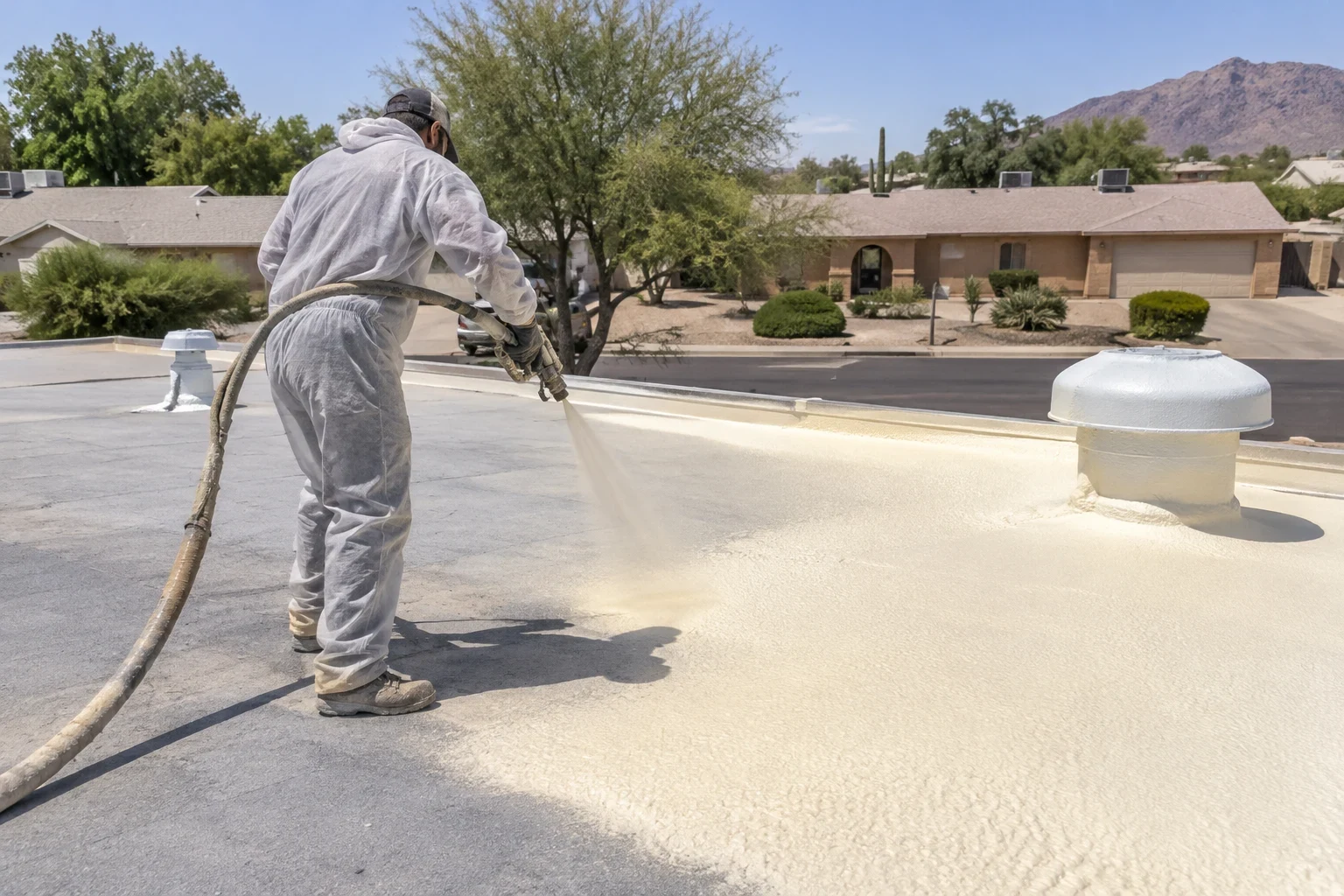
What a Foam Roof Is and When It Makes Sense
Spray polyurethane foam goes on as a liquid and expands into a rigid, closed-cell layer that bonds to the deck below. Because it is sprayed in one continuous pass, there are no seams or laps for water to find, and the foam can be built up slightly thicker in low spots to help water reach the drains and scuppers. It also adds real insulation above the ceiling, which matters on a flat roof that sits in full sun all afternoon.
Foam has one weakness: it breaks down under ultraviolet light. That is why every foam roof is finished with an elastomeric coating, and why that coating needs renewing over the life of the roof. A foam roof that is recoated on time can last a very long time. One that is left bare turns brown, then brittle, and starts taking on water.
Foam is often the right call for flat and low-slope sections, patio roofs and additions. If your roof is pitched, our tile roofing and shingle roofing pages cover the better options, and our flat roofing page compares foam with other low-slope systems.
What Our Foam Roofing Work Includes
- A close look before any price
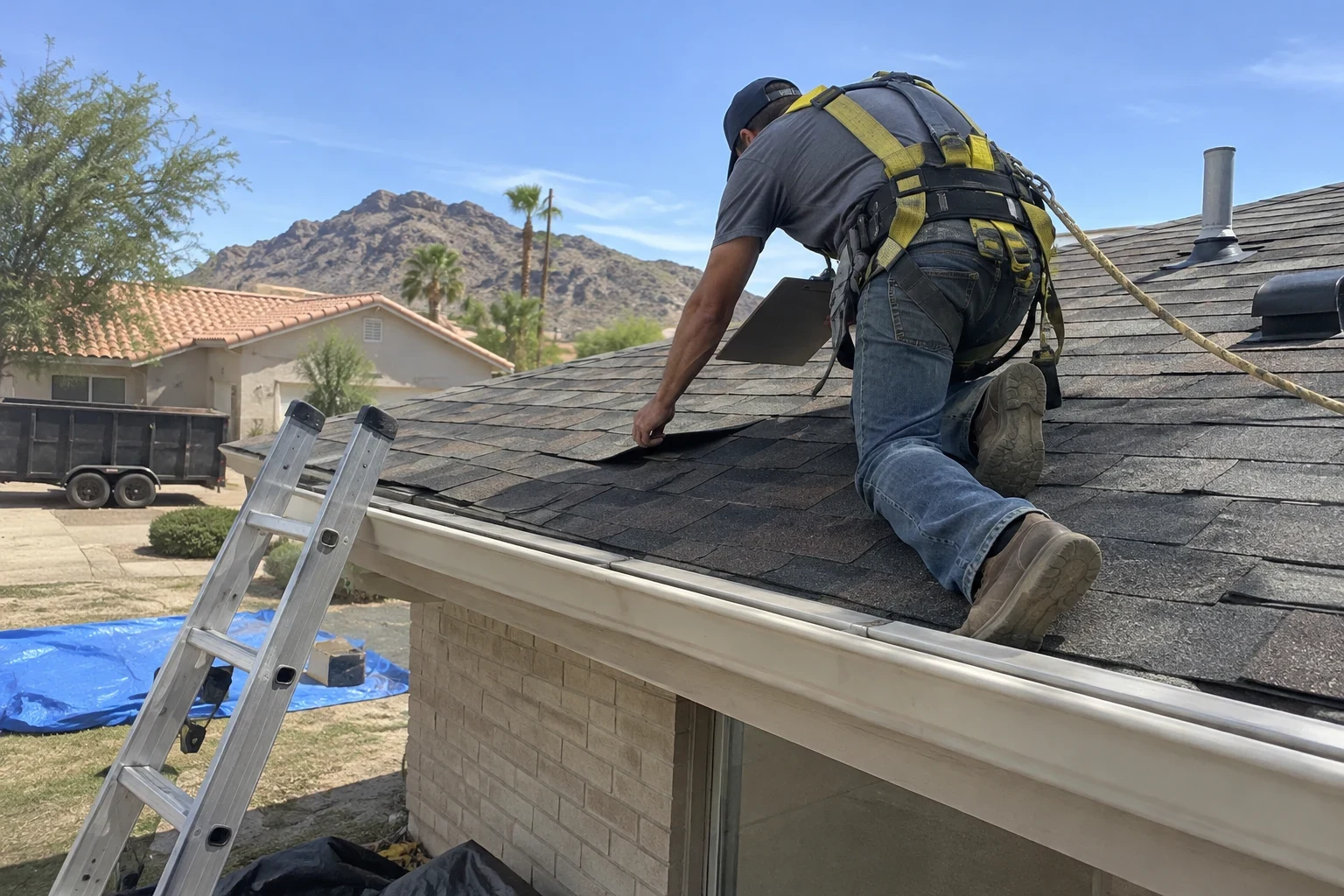
- We walk the roof, measure it and press on suspect areas to find soft or wet foam. Where it helps, we cut a small core to see how thick the foam is and whether the layers below are dry. You get photos of what we found.
- Preparation that the coating depends on
- We pressure wash the surface, scrape away loose coating and cut out blistered or saturated foam. New coating only holds as well as the surface beneath it, so this step gets the most time.
- New foam where it is needed
- For a new roof or a large repair, we spray foam to the specified thickness and shape it toward the drains. Small damaged areas are filled and feathered so they sit flush with the surrounding roof.
- Coating chosen for your roof
- We apply acrylic or silicone coating in the thickness the system calls for, usually in more than one coat. Roofs that hold a little standing water after rain generally do better with silicone, and we will explain why for your specific roof.
- Detail work at edges and equipment
- Parapet walls, scuppers, vent pipes and the curbs under rooftop coolers or AC units are where foam roofs usually fail first. We seal and coat each one by hand.
- Protection and cleanup
- Foam can drift in the wind, so we mask windows, walls and nearby surfaces and ask that vehicles be moved. When the work is done, we clear debris and walk the finished roof with you.
Signs Your Foam Roof Needs Attention
Foam showing through the coating
If you can see tan, orange or brown foam, the coating has worn away. Bare foam starts degrading quickly in strong sun, and catching it at this stage usually means a recoat instead of new foam.
Chalky or cracked coating
A powdery residue on your hand or a web of fine cracks means the coating is near the end of its life.
Blisters and soft spots
Raised bubbles or areas that give underfoot often point to moisture trapped in or under the foam. These spots need to be cut out and dried before anything goes over them.
Small holes and pecked areas
Birds sometimes peck at foam and leave pitted patches. Each hole is an opening for water and needs filling and coating.
Water that stays after rain
Ponding that lingers for a day or two after a monsoon storm wears coating faster and suggests the roof surface needs reshaping.
Stains near parapets or vents
Ceiling stains below the roof edge or under rooftop equipment usually trace back to a failed seal at that detail.
How a Foam Roofing Job Runs
- 1
Your phone call
You describe what you are seeing, and we set a time to come out. From here on, the same person handles your questions, scheduling and any changes.
- 2
Assessment and written estimate
We look over the roof, take photos and tell you plainly whether a recoat will do or new foam is needed. The estimate lists preparation, foam, coating and detail work as separate lines.
- 3
Scheduling around the weather
Foam and coatings need a dry surface, workable temperatures and light wind. We pick a day that suits the material and tell you ahead of time if conditions push it back.
- 4
Work day
The crew masks the property, preps the surface, sprays and coats. Most homes need you to stay off the roof and keep the area clear while coatings cure.
- 5
Walkthrough and cleanup
We clean the site, remove masking and review the finished roof with you, including when your next recoat is likely due.
What Shapes the Cost of a Foam Roof
Foam roofing prices depend far more on what is under the surface than on the size of the roof alone. A sound roof that only needs a recoat costs much less than one with wet foam that has to come out. We explain each line of the estimate so you can see where the money goes.
- Recoat, new foam or tear-off
- Recoating a healthy roof is the lightest job. Adding new foam over an existing roof costs more, and removing saturated material down to the deck costs the most.
- Roof area and foam thickness
- Larger roofs take more material and time. Thicker foam adds insulation value and helps shape drainage, but it also adds cost.
- Coating type
- Acrylic and silicone coatings differ in price and in how they handle standing water. We match the coating to how your roof actually drains.
- Penetrations and equipment
- Each vent, scupper and equipment curb needs hand detailing. A roof crowded with pipes and units takes longer than an open one.
- Permits and access
- Some foam work requires a permit, which we pull when the job calls for one. Tight access or a roof that is hard to reach can also add time.
Foam Roofing Questions
Something not covered here? (480) 845-0946
How long does a foam roof last?
The foam itself can last for decades if it stays protected. The coating is what wears, and it usually needs renewing every several years depending on the product and how much sun the roof gets. Keeping up with recoats is what lets a foam roof keep going.
Can foam go over my existing roof?
Often, yes, as long as the existing roof is dry and firmly attached. We check for trapped moisture first. If we find wet or loose material, it has to come out, because sealing water under new foam causes blisters later.
Should I choose acrylic or silicone coating?
Acrylic works well on roofs that drain cleanly and is easier to recoat later. Silicone handles standing water better but needs silicone again at the next recoat. We will recommend one based on what your roof does after a rain.
Will overspray get on my house or car?
Foam can drift, which is why we mask windows, walls and nearby surfaces and avoid spraying in strong wind. We ask that vehicles be parked away from the house on work days.
Can I walk on a foam roof?
Yes, for occasional access such as servicing a cooler or AC unit. Wear soft-soled shoes and avoid dragging tools. Sharp objects and heavy traffic can puncture the coating, and those spots should be sealed promptly.
Talk to One Person About Your Foam Roof
Tell us what you are seeing up there and we will arrange a visit. The same person who looks at your roof stays with the job until the last of the masking comes down.